







read also
 Vietnam Mortgage Surge Pushes Homes Out of Reach
 Lithuanian Apartment Prices Accelerate Across Major Cities
 London Flats Lose Value Ahead of Leasehold Reform
 Construction of the Batumi–Sarpi Highway Begins in Georgia
 Baltic Property Investment Accelerates in 2026
 Hong Kong and Singapore Renew Their Expat Rivalry
Launch of the Active Tourism Coalition
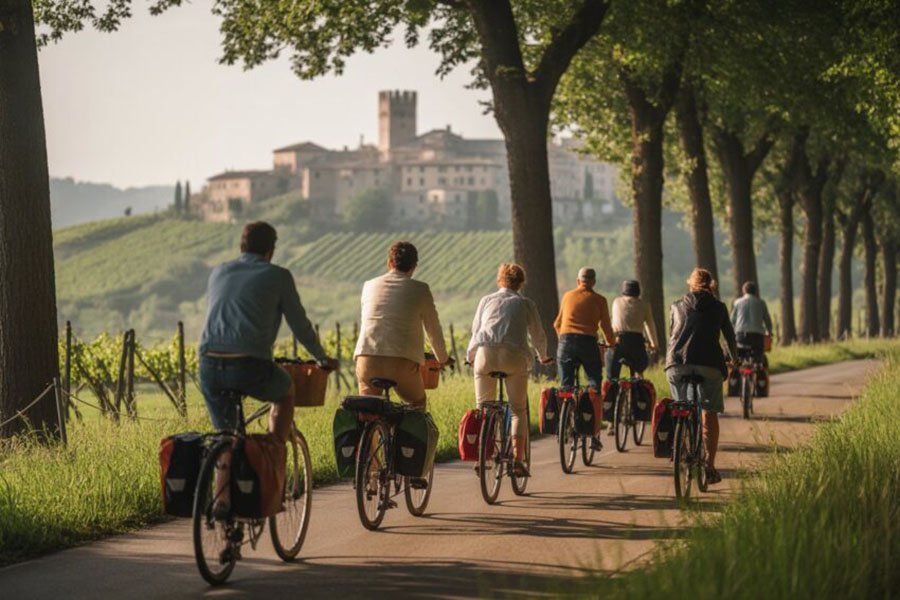
Photo: Travel and Tour World
A new Active Tourism Coalition has officially been launched in Brussels, aiming to shape the future of sustainable tourism policy across the European Union. Led by the European Cyclists’ Federation, the coalition brings together 15 civil society and industry organisations calling on EU institutions to recognise active tourism as a strategic pillar of a sustainable, competitive and resilient European tourism sector.
Defining active tourism
Within the coalition’s framework, active tourism refers to accessible physical activities linked to mobility, recreation and leisure, including cycling, walking and hiking. The initiative argues that this form of tourism allows visitors to experience destinations at a human scale while delivering low environmental impact, strong social value and deeper connections with local landscapes, cultures and communities.
Economic relevance and growth potential
The coalition highlights the significant economic contribution of the sector. Cycling tourism alone was generating an estimated €44 billion annually in Europe as early as 2012, while adventure travel has expanded into a trillion-dollar global market by 2025. Despite this growth, active tourism remains underrepresented in European tourism strategies, according to the coalition’s assessment.
Opportunity within the EU Sustainable Tourism Strategy
With the forthcoming European Sustainable Tourism Strategy under development, the coalition sees a timely opportunity to embed active tourism at the heart of EU policy. It positions active tourism as a response to overtourism, a driver of regional development and a core component of Europe’s global tourism brand.
Infrastructure, governance and investment priorities
The coalition stresses the importance of integrated governance, bringing together local communities, destination managers, tourism operators, transport providers and environmental stakeholders. It also calls for targeted investment, urging EU institutions to prioritise active tourism in the next Multiannual Financial Framework for 2028–2034, including dedicated funding for cycling routes, walking trails and cross-border tourism products.
Industry leadership and institutional engagement
According to the coalition, its members stand ready to work with European and national authorities to strengthen the resilience and competitiveness of Europe’s tourism sector and support more balanced and sustainable tourism outcomes. European Cyclists’ Federation CEO Laurianne Krid emphasised that active tourism can underpin healthier lifestyles, low-carbon travel and stronger local economies, while enhancing Europe’s competitiveness through flagship products such as EuroVelo.
As International Investment experts report, the formal recognition of active tourism at EU level could represent a strategic shift in Europe’s tourism model. By aligning sustainability, regional development and mobility, active tourism offers long-term investment potential and reinforces Europe’s position in an increasingly sustainability-driven global tourism market.