







 Young Japanese Buyers Turn to 50-Year Mortgages
 Argentina Narrows Tourism Gap as Arrivals Rise
 Seattle Luxury Housing Loses Its Former Momentum
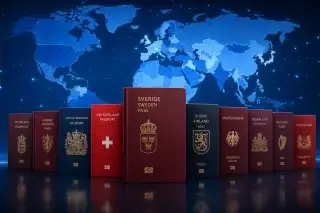 The World’s Strongest Passports for Travel, Living and Investment
 Russian Developers’ Debt Nearly Doubled in a Year
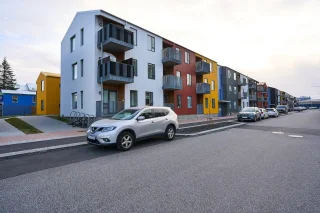 Young Icelanders Shift Into Rental Housing
The Top 10 Countries with the Cleanest Beaches
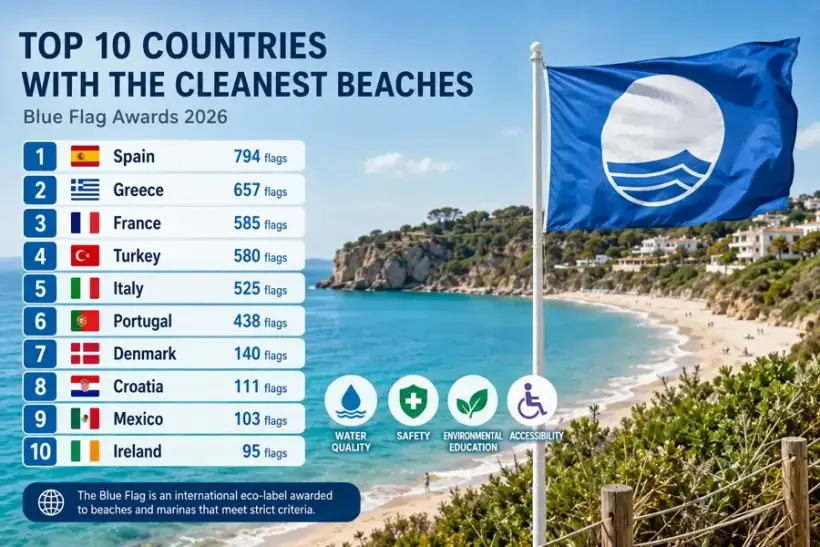
The Foundation for Environmental Education (FEE) has unveiled the results of its annual Blue Flag program for 2026. Spain has once again secured its position as the absolute leader in the number of Blue Flag-certified sites – the internationally recognized benchmark for water quality, safety, and environmental management. The awards ceremony was held in Rome. In 2026, a total of 5,274 beaches and marinas in 53 countries were awarded the Blue Flag.
1. Spain – 794 Flags
Spain has achieved a record-breaking 794 Blue Flag awards, marking an increase of 44 from the previous year, during which the country also topped the global rankings. Leading the domestic list are the Valencian Community (152 beaches), Andalusia (143), and Galicia (118).
2. Greece – 657 Flags
Greece has maintained its second-place global position with 657 awards across all categories. At the prefectural level, Halkidiki holds the highest number of Blue Flag beaches (93). Regionally, Crete leads the nation, with its four prefectures collectively receiving 154 awards.
3. France – 585 Flags
France, the birthplace of the Blue Flag program in 1985, received 585 awards across 182 municipalities in 2026. The Occitanie region leads with 102 beaches and 18 marinas, followed by Provence-Alpes-Côte d'Azur (85 beaches, 27 marinas) and Nouvelle-Aquitaine (48 beaches, 4 marinas).
4. Turkey – 580 Flags
Turkey secured fourth place, slightly improving upon the previous year's total of 577. The province of Antalya leads with 232 Blue Flag beaches, making it the highest-ranking individual region on the planet. Antalya is followed by Muğla (113 beaches) and Izmir (60 beaches). It is important to note, however, that in terms of pure beach count, Turkey actually ranks third globally in 2026, as France’s total includes a significantly higher proportion of marinas compared to actual beaches.
5. Italy – 525 Flags
Italy solidified its fifth-place ranking, with the addition of 87 marinas and 23 lake-based beaches receiving certifications. Liguria remains the domestic leader with 35 awarded beaches. Notable resorts featuring Blue Flags include Sanremo, Sestri Levante, Polignano a Mare, Vieste, Tropea, and Taormina. Like Turkey, Italy ranks higher (fourth) when specifically considering the number of pure beach sites.
6. Portugal – 438 Flags
Portugal received 438 awards across all categories, including 396 beaches (350 coastal and 46 river/inland). This is a slight decrease from last year, which organizers attribute to stricter monitoring and adverse weather conditions affecting water quality at certain coastal points.
7. Denmark – 140 Flags
Denmark, home to the FEE headquarters, consistently ranks among the program's leaders, owing to the high water quality of the Baltic and North Seas.
8. Croatia – 111 Flags
Croatia took eighth place with 111 awards. However, it sits at the bottom of the top ten in terms of beach count alone, as 33 of its flags were awarded to marinas. The Istria region holds the most certified beaches (43), with the town of Poreč – often called the "Blue Flag capital" – leading with 17 flags. Other notable locations include Umag (7), Vrsar (6), and Rovinj (5).
9. Mexico – 103 Flags
Mexico remains the top destination in the Americas. Its certified beaches are distributed roughly equally between the Pacific and Caribbean coasts.
10. Ireland – 95 Flags
Ireland rounds out the top ten, validating the high water quality along its Atlantic Ocean and Irish Sea coastlines.
The Blue Flag program has been operating since 1985. It is awarded annually to beaches and marinas that meet a rigorous set of criteria – ranging from water quality and safety to environmental education and accessibility for individuals with disabilities, according to International Investment experts.
To qualify, a beach must meet at least 30 criteria across four categories, while a marina must satisfy at least 38 criteria across six categories. Because the certificate is valid for only one year, the composition of the list changes annually as some sites lose their status due to non-compliance, while others earn the distinction for the first time.