







 Turkey Lowers Cap on Residential Rent Increases
 Tskhaltubo Needs a New Strategy to Attract Tourists as Visitor Numbers Decline
 Maldives Introduces Email Verification for Tourists
 Scammers Target Tourist Parks Across Australia
 Serbia Plans Unified Real Estate Listings Database
 "Emotions are Georgia": Georgia's Tourism Roadshow in Kazakhstan
EFE / MARISCAL
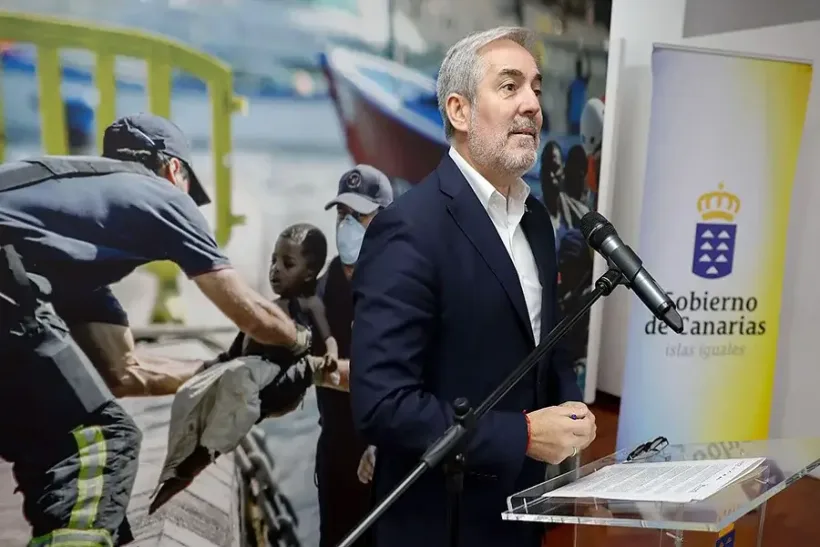
Thousands of migrants from West Africa have arrived in the Canary Islands by boat over just a few days. El Hierro, a small island, has struggled to cope with the influx: its hospital, rescue services and transport network are under severe pressure. Following an appeal from regional authorities, Madrid declared a migration emergency on November 10 and approved €16.18 million in assistance for the archipelago.
What happened
The migration crisis in the Canary Islands worsened sharply in the autumn. During the first six months of 2026, 3,708 people arrived in the archipelago. The figure rose to 6,194 in October, followed by another 7,432 in the first ten days of November. Local services were unable to process and transfer so many arrivals to reception centres within such a short period. El Hierro was particularly badly affected, as its temporary accommodation capacity is limited.
According to RTVE, more than 8,000 people arrived on El Hierro in the five weeks leading up to November 7, compared with a resident population of around 11,400. On November 6, the island council declared a social emergency: there were too few staff and reception places, while transfers to other islands were falling behind. Canary Islands President Fernando Clavijo demanded Madrid's intervention, discussed the crisis with Prime Minister Pedro Sánchez and secured an emergency meeting of the interministerial commission on November 10.
El Hierro struggles to cope
Migrants arriving by sea are brought to the port of La Restinga for medical examinations. They are then transported to a temporary reception centre in San Andrés. Some need treatment for dehydration and other complications after the long crossing. Patients in serious condition are taken to El Hierro's hospital, which also serves local residents. The sudden rise in patient numbers has increased the pressure on medical staff, while emergency responders have had to work with little rest.
Transport services have also come under strain. The island has around 40 buses serving regular, school and tourist routes. Some vehicles have to be reassigned to carry migrants from the port, prompting the authorities to request another four to six buses. Disruptions in La Restinga have affected fishermen, restaurants and diving centres. For a small community heavily dependent on fishing and tourism, the restrictions have been particularly disruptive.
Madrid's emergency measures
The Spanish government will allocate €15.18 million to expand capacity at state reception centres and transport migrants between the islands and to mainland Spain. The Red Cross will receive a further €1 million for medical assistance at the port and initial screening facilities. The measures are intended to ease pressure on the hospital and accelerate transfers from El Hierro, where long-term accommodation options are limited.
The Guardamar Calíope rescue vessel will also be deployed to the Canary Islands. That will bring the number of operational vessels of its class in the archipelago to three out of the five in service across Spain. Madrid has also agreed to reinforce the police, Civil Guard and interpreting services: staff shortages have delayed registration and onward transfers. Additional personnel will handle documentation for relocating unaccompanied minors to other regions.
The Canary Islands government is also seeking compensation for businesses affected in La Restinga. Madrid has agreed to assess local authorities' expenses and the economic impact on the island, but payment amounts have not been set. Tax relief has been proposed for residents of the town. Spain's Ministry of Finance has yet to approve the initiative, so the proposed benefits are not in force.
Why departures from Africa have increased
RTVE links the rise in Atlantic migration to calmer autumn seas and reduced surveillance along the West African coast. The Canary Islands president said Senegal had reassigned around 15,000 security personnel to protect the Youth Olympic Games, taking place from October 31 to November 13. In his view, migrant-smuggling networks took advantage of that shift. There is no independent assessment of how much it contributed to the surge.
Coastal patrols in The Gambia are also thought to have weakened amid an election campaign. Tighter controls off Mauritania, meanwhile, have pushed smugglers farther out into the Atlantic. Crossings from Senegal and The Gambia can take five to seven days and are becoming more dangerous. El Hierro is among the first islands reached along this route, although its infrastructure was never designed for large-scale arrivals.
The Canaries seek EU support
On November 6, Canary Islands President Fernando Clavijo sent a letter to EU Commissioner for Internal Affairs and Migration Magnus Brunner requesting urgent assistance. The regional government is seeking a broader role for Frontex in countries where the boats depart, stronger cooperation with Senegal, The Gambia and Mauritania, and sustained funding for migrant reception. It is also urging Madrid to speed up transfers to mainland Spain. Clavijo argues that the islands lie on the European Union's external border and cannot manage the increasing burden alone.
Following the meeting in Madrid, national and regional authorities agreed to review implementation of the measures every week. Clavijo welcomed the decision but stressed that assistance had come too late: emergency resources were approved only after the hospital, transport network and reception services had reached their limits. Further developments will be shaped by the pace of transfers from El Hierro and efforts to reduce dangerous boat departures from Africa.
Trends and outlook
International Investment analysts note that Spain has repeatedly experienced sharp surges in irregular migration at different sections of its border. During a mass crossing into Ceuta on July 30–31, around 70,000 people arrived, according to Prime Minister Pedro Sánchez. The repercussions extended beyond Spain: Italy temporarily introduced checks on air and sea connections with the country, while France also tightened controls. November's crisis in the Canary Islands has again highlighted the implications for the entire Schengen Area.
Meanwhile, Madrid continues its policy of regularising the status of migrants already living in Spain. The 2026 programme received 1,174,978 applications; recent arrivals are not eligible. Spain distinguishes between efforts to prevent irregular entry and procedures for granting legal status to foreign nationals already in the country. For some EU partners, however, stronger border enforcement remains the priority, and repeated crises could deepen policy differences.
In the near term, Spanish authorities may have to step up maritime patrols, expand cooperation with West African countries and accelerate transfers from smaller islands. This would not necessarily mean abandoning Spain's existing approach to migrant integration. Further mass crossings could prompt other EU countries to demand a tougher Spanish migration policy and reinstate stronger checks at internal Schengen borders.