







 Belgian Industrial Property Draws €537m of Capital
 Australian Property Market: Fastest Downturn in 40 Years
 Buying Land in Argentina: Restrictions for Foreigners
 Albania Limits Residential Development in Resort Complexes
 10,883 Apartments Sold in Batumi in 2026 — Galt & Taggart
 Hilton and Scandic Plan New Hotels Across Nordics
Madrid to Build €1 Billion City of Health Complex
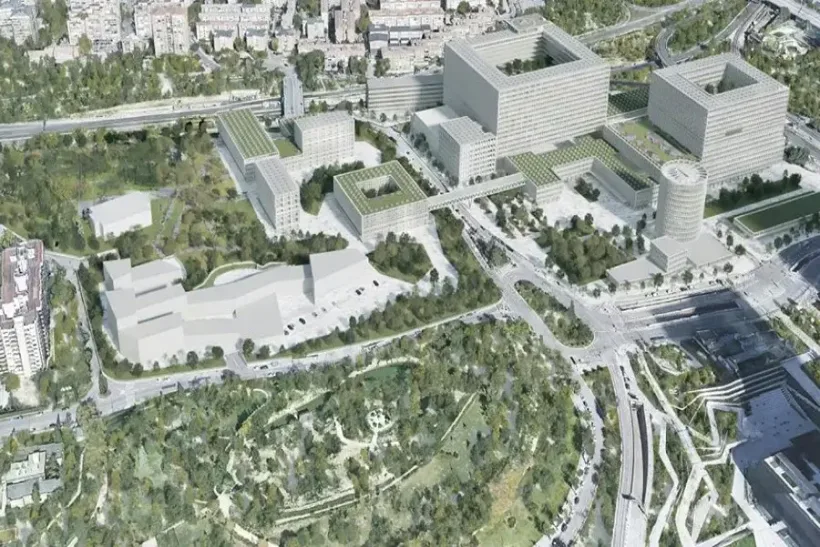
Madrid plans to build the City of Health, a medical complex costing around €1 billion, on the site of La Paz University Hospital. The regional government has allocated €766.4 million to the project's first two phases and launched a tender. Main construction work is scheduled to begin in the second quarter of 2027 and take eight years.
Construction Stages and Timeline
The redevelopment of La Paz University Hospital involves rebuilding its main facilities while continuing to treat patients. Work will proceed in stages: new buildings will be completed and departments moved into them before the older structures are demolished. This approach should allow the hospital to remain open throughout the project.
The first phase will deliver a tower for adult inpatients and a central medical services building housing diagnostic and treatment departments. The second phase will involve demolishing the existing general medicine and trauma buildings. An outpatient centre and a dedicated maternal and child healthcare building will be built on the cleared site.
Major construction is due to start in the second quarter of 2027. The two phases have been allotted 96 months, suggesting completion around 2035. Officials previously cited 2032, but documentation released in November 2026 sets out a longer schedule.
Inside the City of Health
The total floor area of the new complex will exceed 550,000 square metres, almost double that of the existing La Paz hospital buildings. It will have 1,140 beds, an increase of 128, and another 218 reserve places will be available if needed. Most patient rooms will be single occupancy, although some can be adapted to accommodate two people.
The hospital will have 49 operating theatres, including facilities for robotic and hybrid surgery. There will be 243 places in the day hospital, 194 in intensive care and 255 in emergency services.
|
Indicator |
After redevelopment |
|
Total floor area |
Over 550,000 m² |
|
Hospital beds |
1,140 |
|
Reserve places |
218 |
|
Operating theatres |
49 |
|
Day hospital |
243 places |
|
Intensive care |
194 places |
|
Emergency services |
255 places |
The City of Health will also have a specialist paediatric cancer centre and a proton therapy unit. This technology allows radiation to target tumours more precisely while causing less damage to healthy surrounding tissue.
The development will include research laboratories and a new building for the medical faculty of the Autonomous University of Madrid. Accommodation will be provided for patients' relatives, teaching staff and researchers. The buildings will be connected by convenient walkways, with public spaces between them. The new campus will therefore bring together medical care, education and scientific research.
Investment in Construction
Preparations for the City of Health began well before the main tender was announced. In November 2025, the Madrid regional authorities awarded a contract worth around €29 million to build an engineering services building for La Paz Hospital. The facility will house heating, cooling, power supply and medical gas equipment. Underground utilities will connect it to the other buildings, helping the hospital operate without interruption during redevelopment.
By November 2026, contractors had completed a temporary waste collection and removal area. Earthworks are continuing on the sites of the utility building, underground service corridors and proton therapy facility. Foundation work is the next step.
On November 4, 2026, the regional government approved €766.4 million for the first two phases of reconstruction. Two days later, it launched the tender to build the City of Health. Bids are due by December 11, with financial offers scheduled to be opened on December 23. The final contract price will be known once the tender process is complete.
How the Project Could Change Northern Madrid
La Paz Hospital is in northern Madrid, near Paseo de la Castellana, the Cuatro Torres business district and the large Madrid Nuevo Norte urban development site. The City of Health will remain in this location but will greatly expand the medical and university facilities. Hospital, research, teaching and support buildings will be concentrated on one site.
For the construction industry, the development represents a long-term public contract. For the surrounding area, it means a larger destination for patients, students, doctors and researchers. Over time, this could support demand for transport, restaurants, short-stay accommodation and other local services. However, there are no published estimates of how property values in neighbouring districts might change, so it would be premature to attribute potential price increases directly to the project.
The initiative goes beyond refurbishing separate hospital buildings: it aims to create a multifunctional medical campus. Its investment scale and eight-year construction schedule make the City of Health a significant long-term project for Madrid, although final costs and deadlines will depend on the outcome of the tender and the progress of works.