


Tanker accident off Ibiza: Risks for Spain’s resorts
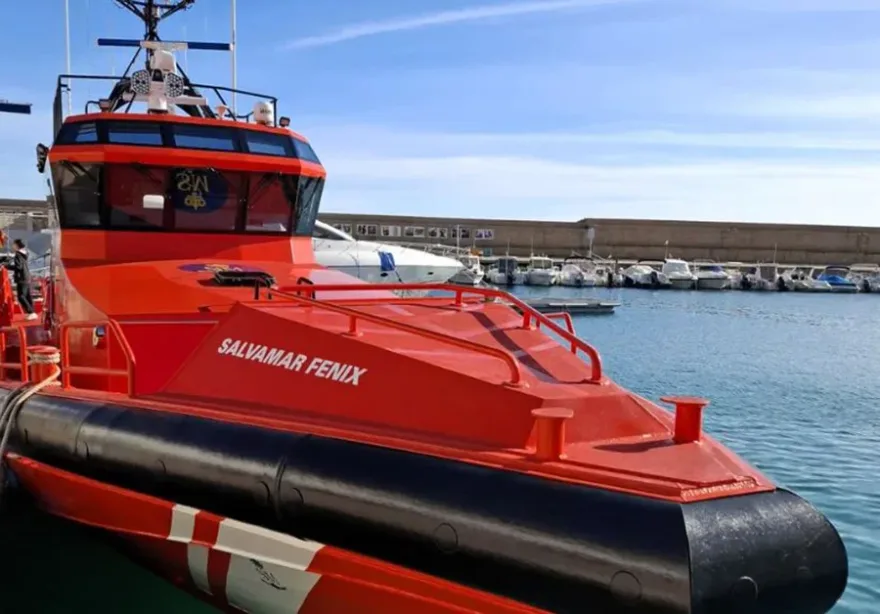
Overnight on 26 November 2026, the tanker Med Emre capsized off the Spanish island of Ibiza. It was carrying around 7,000 tonnes of diesel fuel. One crew member died in the accident and six others were injured. Spanish authorities are taking emergency measures to protect the coast from potential pollution, which poses a serious threat to the marine ecosystem and tourist resorts.
What happened to the Med Emre
The Maltese-flagged vessel was sailing from Algeciras to Barcelona. On the evening of 25 November, sailors reported that water was entering the hull. The crew later sent a distress signal to the rescue coordination centre in Valencia. The tanker capsized around midnight. The cause of the damage has yet to be established.
The crew consisted of 17 Indian and Turkish nationals. Helicopters from Spain’s maritime rescue service, Salvamento Marítimo, and the merchant vessel Prysmian Monna Lisa took part in the evacuation. Seven people were taken to Ibiza, where one of them died at Can Misses Hospital. Four people injured in the tanker accident were diagnosed at another hospital with hypothermia, dehydration and the effects of exposure to petroleum products. Some of those rescued were taken to Valencia. By 10:28 a.m. local time, Cadena SER had reported that 12 survivors had been hospitalised.
Initial reports suggested that the Med Emre had sunk. At 9:26 a.m., however, a search aircraft spotted it floating upside down approximately 19 nautical miles (35 km) north-west of the island. No signs of a diesel fuel spill were detected.
Threats to Spain’s ecosystem
The accident occurred in a part of the Mediterranean Sea through which cetaceans migrate. Francisco del Pozo, who leads Greenpeace Spain’s fossil fuel campaign, warned in an interview with the EFE news agency of serious environmental risks to the Balearic Islands. Northerly winds could quickly carry petroleum products towards Ibiza’s shores. This would threaten the region’s natural environment and economy, particularly fishing and tourism.
Pablo Rodríguez, director of the Marilles conservation foundation, compared the potential consequences of a diesel fuel spill with the 2002 Prestige tanker disaster in an interview with Europa Press. Diesel is lighter than heavy fuel oil and evaporates more quickly. Its high toxicity, however, poses a danger to marine life.
Environmentalists are particularly concerned about underwater Posidonia seagrass meadows, which play an important role in preserving Mediterranean biodiversity. If the Med Emre sinks completely, the hull and the cargo remaining inside could become a source of long-term pollution. Rodríguez considers towing the tanker into port the best option, provided it is technically feasible.
How the Balearic Islands and Valencia are being protected
On the evening of 25 November, Spain’s Directorate-General for the Merchant Marine declared level-two readiness under the National Maritime Plan (Plan Marítimo Nacional) to combat marine pollution. The Ministry for the Ecological Transition also became involved. It activated Plan Ribera, a programme for protecting the coastline from oil pollution.
The Balearic Islands government activated its regional emergency response plan, PLATERBAL, at level zero. Specialists are studying currents and forecasting where the fuel could travel in the event of a leak. Equipment is already being prepared for cleaning Ibiza’s beaches. The port of Sant Antoni could serve as a base for the operation. The Valencian Community has also declared a preliminary state of alert due to the risk of coastal water pollution.
The specialised spill response vessel Clara Campoamor was dispatched to the area. Pablo Garris, head of the archipelago’s emergency services and interior affairs department, believes that finding the Med Emre afloat improves the chances of recovering its cargo. The maritime authorities and the tanker’s owners must now determine how to pump out the diesel fuel. It remains unclear whether this will be technically feasible.
Ibiza’s experience with oil spill clean-up
The island has faced a similar threat before, at the height of the tourist season. The Don Pedro cargo ship sank on 11 July 2007 after striking a small islet near the port of Ibiza. Leaking fuel contaminated around 5 km of coastline. The authorities fully or partially closed the beaches of Talamanca, Ses Figueretes and Platja d’en Bossa.
The oil spill clean-up involved the same vessel, Clara Campoamor, that has been sent to the Med Emre. The Don Pedro lay at a depth of around 40 metres, allowing divers to seal the leaks. Eventually, 93% of the fuel was recovered, La Voz de Ibiza reports.
The two incidents should be compared with caution. In 2007, the pollution originated close to the port and fuel reached the beaches within hours. The latest accident occurred much farther offshore, and the petroleum products involved have different properties. It is still difficult to assess the scale of potential damage.
Risks for tourism and investment in Spain
The condition of coastal waters directly affects the appeal of Mediterranean resorts. Oil contamination on beaches could lead to swimming restrictions, the cancellation of boat trips and the suspension of leisure businesses’ operations. The duration of any recovery efforts would depend on the extent of pollution, weather conditions and the effectiveness of the rescue operation.
International Investment analysts note that a major fuel spill could cause financial losses for hotel owners and investors in properties used for short-term rentals. Their income depends directly on tourist demand, which could be affected by prolonged environmental deterioration. At present, however, there is no reason to conclude that Spain’s resort areas have become less attractive to investors.
Seasonality remains an important factor. The accident occurred in late November, leaving Spanish authorities several months before the busy beach season begins. As of 26 November, there had been no reports of pollution along the Balearic Islands’ coastline. The outlook will largely depend on the condition of the tanker’s tanks and the feasibility of recovering the fuel.
FAQ
When did the tanker accident off Ibiza occur?
The Med Emre accident occurred overnight on 25–26 November 2026.
How much diesel fuel was the Med Emre carrying?
The tanker was carrying around 7,000 tonnes of diesel fuel.
Did the tanker sink completely?
On the morning of 26 November, the rescue service found the vessel floating upside down.
Are Ibiza’s beaches polluted?
According to information published by midday on 26 November, no coastal pollution had been detected.
What measures have the Spanish authorities taken?
National and regional emergency response plans have been activated, the surrounding waters are being monitored, and preparations are under way to clean up any potential spill.
Planning to buy property abroad?
Discuss the country, budget and goals with a consultant.