











European Real Estate Market 2026 – RationalFX Study
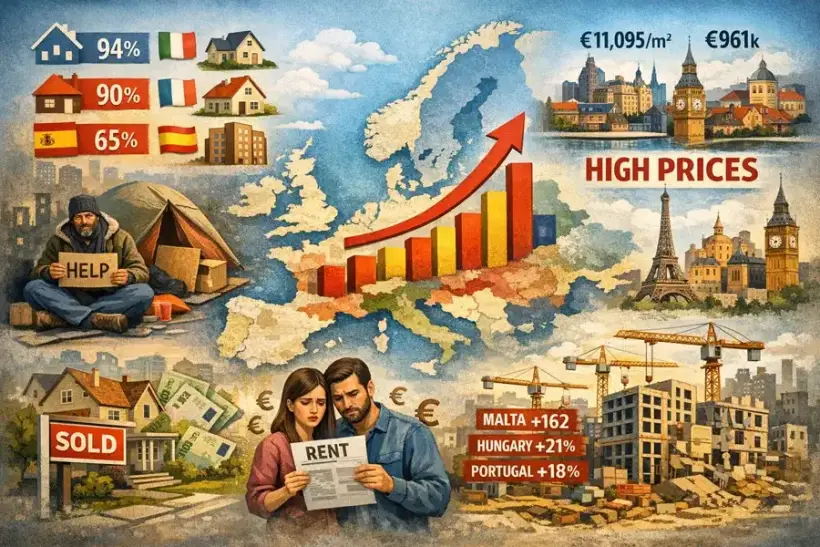
Over the past decade, housing prices in Europe have increased by more than 60%, rental rates have risen by 20%, and one in six Europeans suffers from inadequate or no housing at all. Around one million people on the continent are completely homeless. RationalFX analysts examined key indicators of the European real estate market: ownership structure, housing types, price dynamics, and construction rates.
Key Indicators
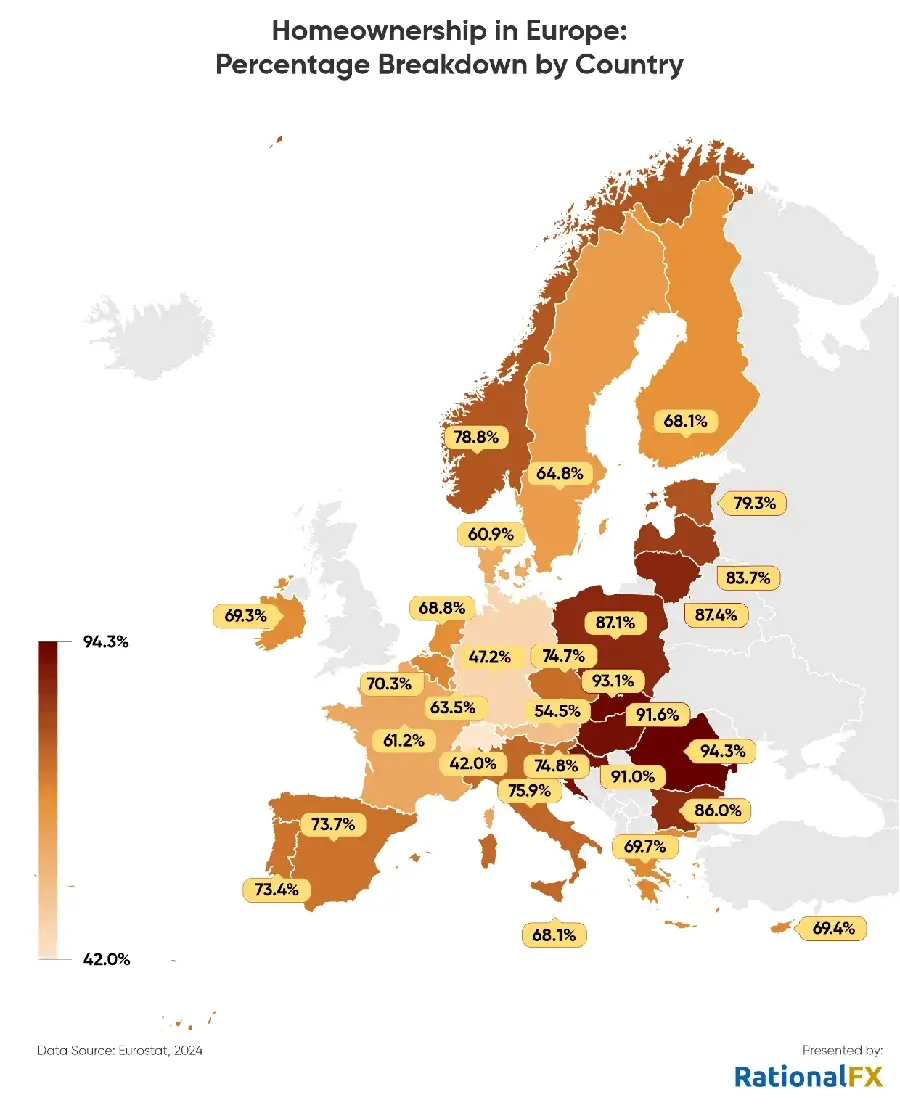
• Highest homeownership rates (percentage of total population): Romania (94.3%), Slovakia (93.1%), Hungary (91.6%), Croatia (91%)
• Leaders in single-family houses (not apartments): Ireland (90%), Netherlands (77%), Belgium (77%)
• Leaders in apartment dwellings: Spain (65%), Latvia (64%), Switzerland (64%)
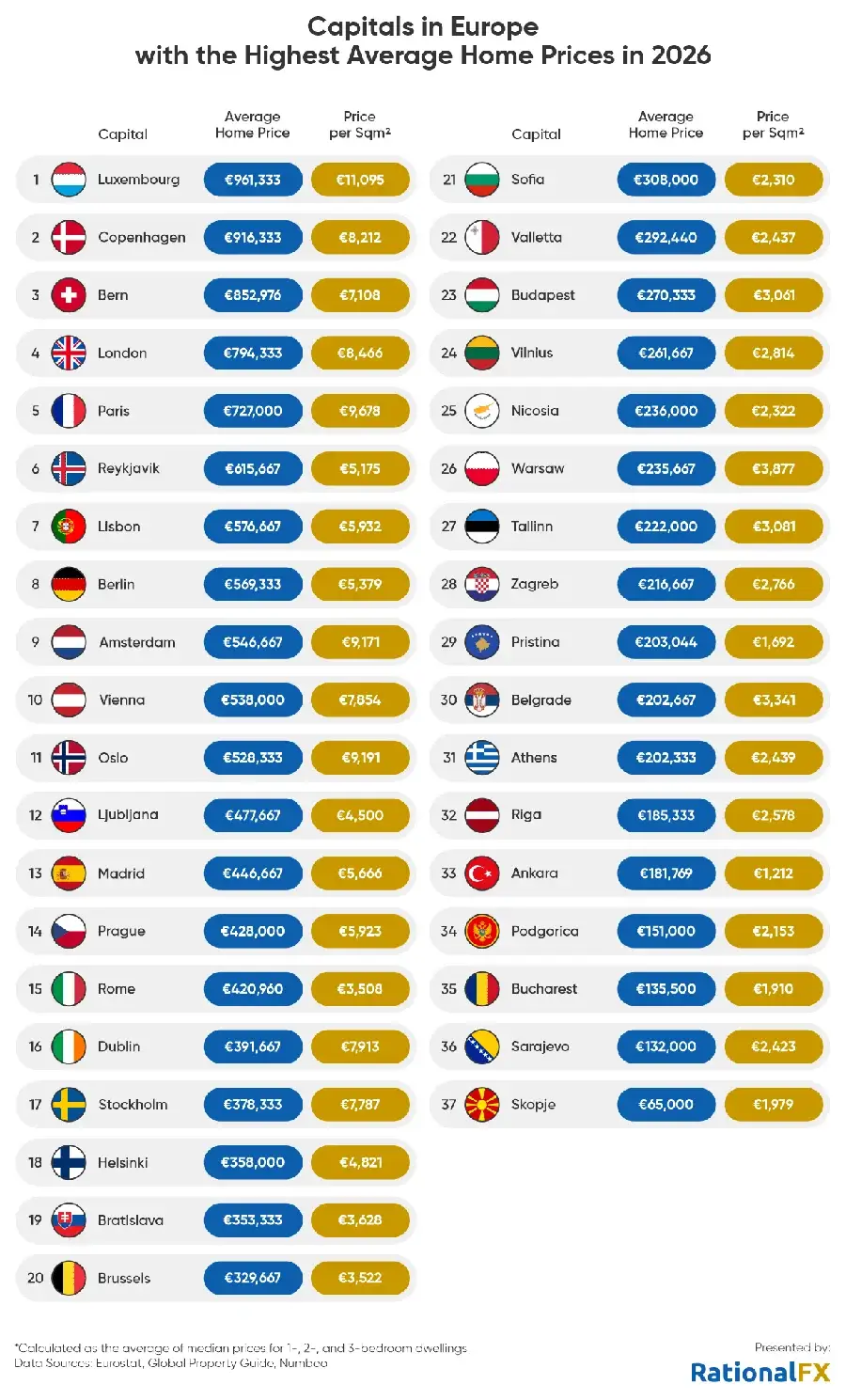
• Most expensive capitals: Luxembourg (average housing price €961,333) and Copenhagen (€916,333)
• Price per m² – leaders: Luxembourg (€11,095/m²), Paris (€8,212/m²), Oslo (€7,108/m²)
• Annual price growth in 2025 (excluding inflation): Hungary (+21%), Portugal (+18%), Bulgaria (+15%)
• Construction permits per capita: Malta (162 per 10,000 people), Turkey (86), Albania (72)
Homeownership – Luxury or Norm?
The concept of “owning a home” in Europe is becoming increasingly complex. In regions where most citizens once owned property, young people increasingly rely on inheritance or abandon the dream of buying a home.
The highest homeownership rates are in Romania (94.3%), Slovakia (93.1%), Hungary (91.6%), and Croatia (91%), a legacy of post-socialist privatization. Yet even here, urban housing is becoming less accessible: mortgages are rising, and young families increasingly depend on parental support.
Southern Europe – Italy (75.9%), Spain (73.7%), Portugal (73.4%) – maintains relatively high ownership rates. In contrast, Austria (54.5%), Germany (47.2%), and Switzerland (42%) have rental systems as the norm, supported by social and cooperative housing and strong tenant protections under the law.
Houses or Apartments: Where Each Dominates
Housing type reflects history, urban density, cultural traditions, and economic realities.
Ireland leads with 90.2% of residents living in houses, followed by the Netherlands (77.1%) and Belgium (76.8%).
In Spain, 65% of residents live in apartments. In 2025, foreign buyers purchased nearly 100,000 units, the highest since the pre-crisis boom, intensifying market competition.
In Latvia and Switzerland, high apartment shares reflect a deliberate rental trend rather than a shortage.
Germany’s prolonged construction shortage, slow permitting, and rising material costs have created demand far exceeding supply, with developers focusing on large-scale residential projects.
Most Expensive Capitals
Luxembourg leads both in average property price (€961,333) and price per square meter (€11,095). Limited land supply makes it Europe’s most expensive market. Following are Bern (€852,976) and Copenhagen (€916,333).
London and Paris remain emblematic of extremely high-cost markets, with high prices per square meter combined with large housing units and ongoing debates about mortgage accessibility.
At the other end, Skopje (€65,000) is the cheapest European capital for purchasing housing, nearly three times less expensive than Sarajevo (€132,000) and Bucharest (€135,500).
Only Sofia (€308,000) stands out among Eastern European capitals, approaching Brussels (€330,000): Bulgaria’s entry into the eurozone and rising domestic demand have sharply accelerated price growth.
Where Prices Are Rising Fastest
In 2025, European housing markets diverged, revealing deep structural contrasts.
Leaders in annual price growth (excluding inflation): Hungary (+21%), Portugal (+17.7%), Bulgaria (+15.4%). For comparison, the EU average annual growth was 5.5%. Croatia, Slovakia, and Spain also showed double-digit growth.
Developed Western European and Scandinavian markets cooled: Luxembourg, France, and Sweden showed minimal growth, while Finland recorded a price decline due to demographic stagnation and tighter credit conditions.
Construction Boom: Who Is Building the Most
Malta tops the list with 162 permits per 10,000 residents, driven by foreign investment and population growth. Chinese buyers have accounted for about 40% of all non-EU citizen permits in Malta since 2021.
Turkey (86 permits) exceeds France and the UK combined, reflecting government post-earthquake recovery programs.
Ireland (68 permits) is implementing an ambitious program to build 300,000 new homes by 2030.
A Crossroads for Policymakers
The European housing market is at a crossroads: Eastern European countries show rapid growth, while Western markets face stagnation and overvaluation, with construction activity concentrated in limited growth areas.
Housing affordability is shifting from a social problem to an economic issue: lack of property limits labor mobility, slows growth, and undermines social cohesion.
International Investment experts believe that maintaining the investment appeal of Western European real estate markets requires a systemic strategy: simultaneous stimulation of construction and urban planning reforms, rather than isolated measures.