







read also
 Vietnam Mortgage Surge Pushes Homes Out of Reach
 Lithuanian Apartment Prices Accelerate Across Major Cities
 London Flats Lose Value Ahead of Leasehold Reform
 Construction of the Batumi–Sarpi Highway Begins in Georgia
 Baltic Property Investment Accelerates in 2026
 Hong Kong and Singapore Renew Their Expat Rivalry
Skyscanner Redefines Package Travel
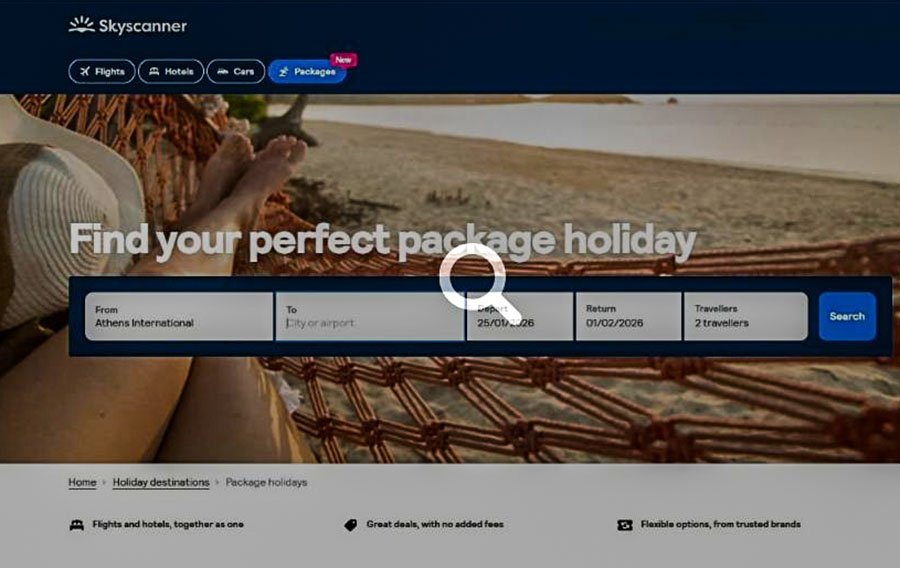
Photo: Travel Daily news
Skyscanner’s launch of a Package Holidays comparison tool marks a strategic shift for the metasearch giant. Long known primarily for flight comparison, the platform is now moving deeper into the holiday value chain, positioning itself closer to the moment when travelers commit not just to a flight, but to an entire trip.
The quiet comeback of package holidays
Package travel is regaining appeal as travelers seek simplicity amid rising prices, overcrowded destinations, and planning fatigue. By aggregating offers from major players such as TUI, Jet2, easyJet Holidays, and Expedia, Skyscanner taps into this renewed demand. What appears to be a convenience upgrade is, in reality, a bid to capture traffic that once flowed directly to tour operators and OTAs.
Consumer convenience, platform dependence
For users, the value proposition is clear: a single interface, granular filters, and ATOL-protected offers. Yet this convenience deepens reliance on a platform that does not sell holidays itself but increasingly shapes purchasing decisions. Skyscanner remains a comparison engine, but one that now sits higher in the decision funnel.
Why the move matters for the industry
The expansion strengthens the power of metasearch at the expense of suppliers. Operators gain visibility, but at the cost of pricing control and brand ownership. As competition for ranking intensifies, dependence on aggregators risks compressing margins, particularly for mid-sized and specialist travel providers.
Packages as a response to uncertainty
Rising interest in package holidays reflects a broader behavioral shift. Travelers are prioritizing predictability over flexibility, favoring fixed pricing, single-provider accountability, and financial protection. Skyscanner is effectively monetizing this desire for certainty by offering choice within a standardized framework.
A neutral platform or a silent gatekeeper
While Skyscanner insists it remains a neutral comparison service, its growing influence over visibility and user choice positions it as a de facto gatekeeper. The more travelers rely on its results, the more power the platform gains in shaping demand — and, indirectly, market outcomes.
Implications for 2026 travel dynamics
The package holiday comparison tool aligns with a broader trend toward simplification and channel consolidation. In the short term, travelers benefit from transparency and ease. Over time, however, control over distribution and pricing is likely to concentrate further in the hands of a few global platforms.
As reported by experts at International Investment, Skyscanner’s move into package holiday comparison signals a deeper consolidation of platform power in travel. While consumers gain convenience, operators face growing dependence on metasearch visibility, raising long-term questions about margins, competition, and market balance.