


Air Travel Accounts for 17.2% of EU Residents’ Trips
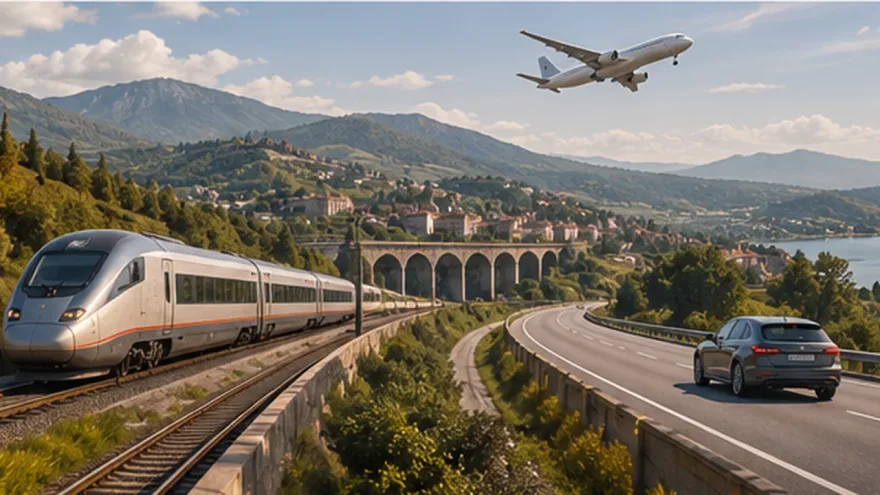
EU residents made approximately 1.2 billion tourism trips in 2025, with air transport accounting for 17.2% of journeys. Land transport remained dominant at 81.4%, while waterways accounted for 1.4%, according to Eurostat figures released on 19 November 2026.
Cars dominate the number of trips
Cars were used as the main mode of transport on 63.3% of all tourism trips. Rail accounted for 13.3%, and buses and coaches for 3.8%. Taken together, land-based modes represented more than four out of every five trips.
The methodology matters. Eurostat counts journeys by EU residents aged 15 and over, for personal or business reasons, involving at least one overnight stay. Where travellers use more than one mode, the main mode is the one used for the longest distance. Shares measure the number of trips, not passenger kilometres, airline revenue or the amount tourists spend on transport. The statistics include domestic and outbound trips, including travel outside the EU.
Island countries depend more on flights
Air accounted for 61.6% of tourism trips by Maltese residents, 51.1% of those by Cypriot residents and 41.8% of those by Irish residents. Luxembourg and Denmark also recorded high shares, at 38.5% and 36.6% respectively.
At the other end, Romania reported 94% of trips made by land, Slovenia 90.4%, Bulgaria 89% and Czechia 88.9%. These figures describe the choices of each country's residents, rather than the way international tourists arrive in those countries. A high car-travel share among Romanian residents cannot be equated with the arrival patterns of overseas hotel guests in Romania.
What the modal split says about tourism property
The data show why road access remains relevant to hospitality investment, particularly in destinations drawing domestic and short-distance visitors. Drive-to resorts and hotels may benefit from motorway access, parking and proximity to major population centres. Markets with a heavier dependence on aviation need to consider flight frequency, airport connectivity and the vulnerability of route networks.
These are planning considerations rather than immediate hotel performance forecasts. Eurostat's transport statistics do not measure room occupancy, hotel revenue or individual asset yields. Such estimates require destination-level arrival data, booking volumes, room pricing and operating expenses.
This release concerns overnight tourism trips. It should be kept separate from Eurostat's statistics on the principal transport mode used in everyday mobility, which have a different population and a different denominator.
FAQ
What does the 17.2% air travel share mean?
Air was the main transport mode for 17.2% of tourism trips made by EU residents in 2025. The share measures overnight trips, rather than distance travelled or spending.
Does the data include travel outside the EU?
Yes. It covers trips by EU residents, including domestic and outbound destinations. The figures do not describe only travel within the EU or the transport used by inbound visitors.
How is the main mode of transport selected?
When travellers use several modes on one trip, Eurostat selects the mode used for the longest distance.
Who is included in these tourism statistics?
The data cover EU residents aged 15 and over taking personal or business trips with at least one overnight stay. Same-day visits are excluded from this measure.
Planning to buy property abroad?
Discuss the country, budget and goals with a consultant.