









More Than 24,000 Apartments Sold in Tbilisi and Batumi in Five Months
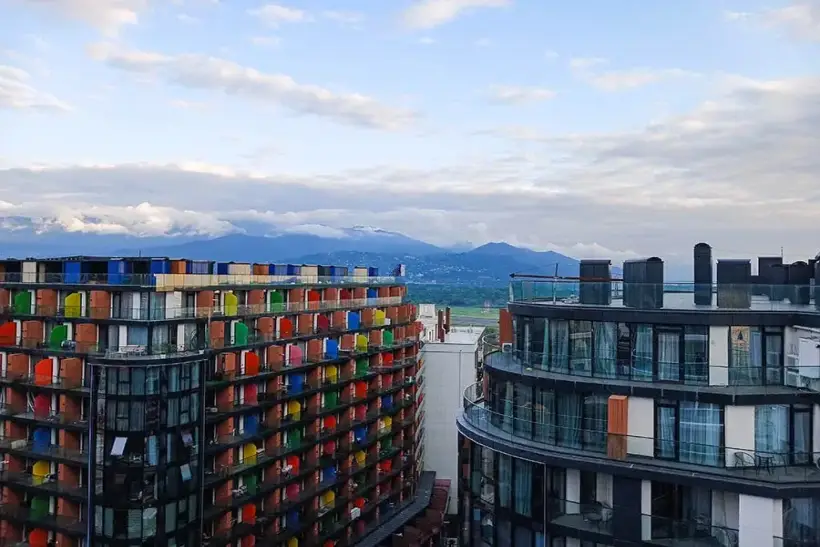
Georgia's residential property market remained highly active in 2026. Tbilisi and Batumi continued to be the country's key demand centers, with more than 24,000 apartments sold during the first five months of the year, according to Colliers Georgia. In the capital, activity was driven by new residential developments and domestic demand, while foreign buyers played a significant role on the Black Sea coast.
Tbilisi: Market Volume Up 32.4%
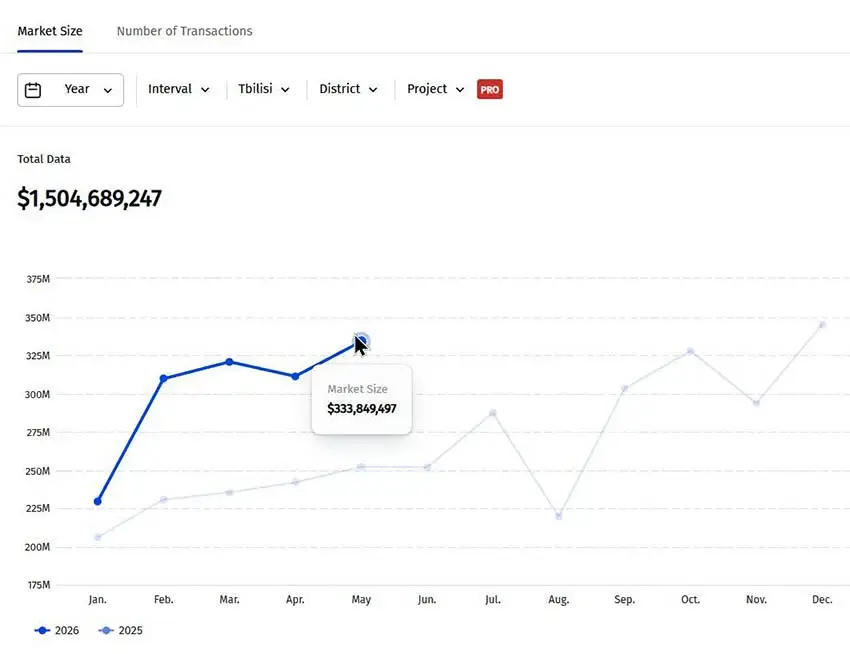
In May 2026, 3,787 residential property transactions were registered in Tbilisi, up 13.1% year over year. Market volume increased by 32.4% to USD 334 million.
The number of transactions involving newly built apartments rose by an average of 15.3%. Within this segment, primary market transactions increased by 11.4%, while transactions involving apartments in newly built buildings resold on the secondary market climbed by 20.7%. Around 40% of this growth came from the Samgori district. At the same time, transactions involving older residential projects increased by 5.1%.
Georgian citizens remained the dominant buyers in Tbilisi. Foreign buyers accounted for 11.4% of transactions involving both new and older residential projects. Apartment prices continued to rise across all areas of the city. Prices increased by 7.2% in the suburbs, 10.6% in the wider center, and 29.6% in the city center, largely due to the registration of transactions in several high-end developments.
Citywide, the weighted average price of newly built apartments increased by 14.9%, while prices on the secondary market rose by 5.5%. The weighted average price of apartments in older projects increased by 23.5% in the city center, 3% in the wider center, and 11.6% in the suburbs. Overall, prices for older apartments in Tbilisi rose by 16%, although this figure was influenced by a relatively small number of recorded transactions.
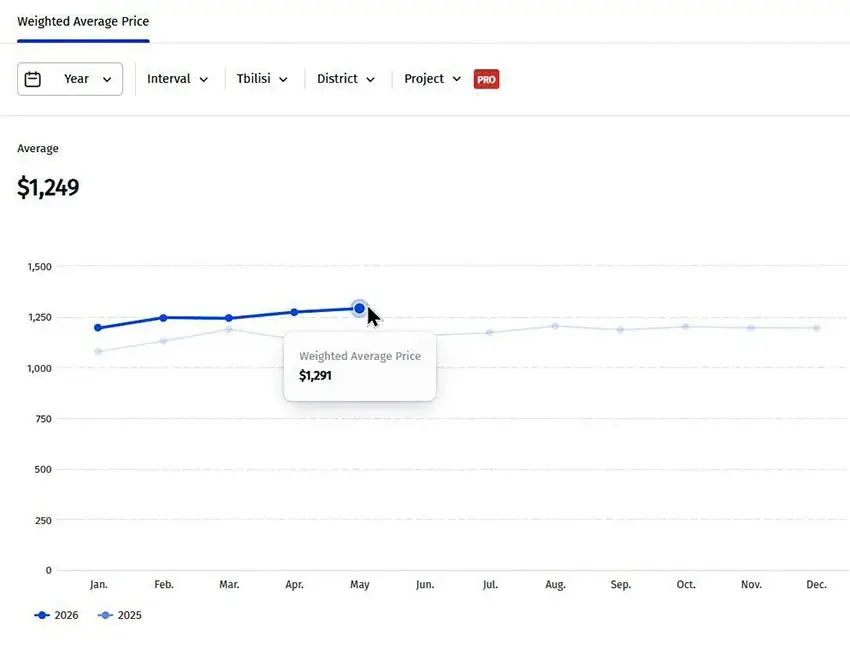
Between January and May 2026, approximately 18,000 apartments were sold in Tbilisi, up 15.5% compared to the same period a year earlier. Market volume reached USD 1.5 billion, an increase of 29%.
Batumi: Foreign Buyers Accounted for Nearly Half of Demand
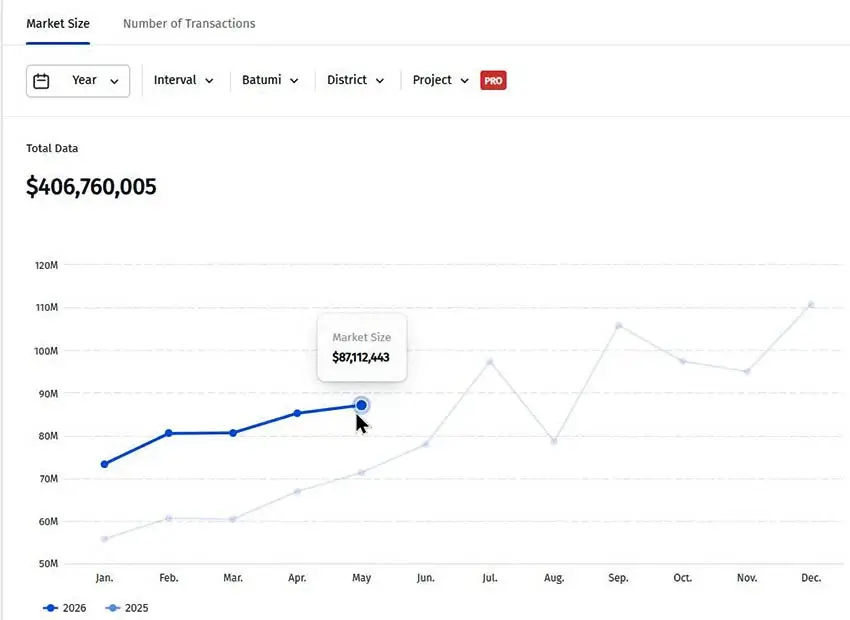
In May 2026, Batumi recorded 1,324 residential property transactions, up 2.5% year over year. Market volume grew much faster, rising 22.2% to USD 87 million.
Transactions involving apartments in new residential projects increased by 3.3%. However, the trend varied by market segment: primary market transactions declined by 8.5%, while transactions involving newly built apartments on the secondary market increased by 13.4%.
Sales of apartments in older residential projects fell by 7.3% compared to May 2025. At the same time, foreign buyers accounted for 49% of all transactions involving both new and older residential projects. They were responsible for 59% of the overall increase in transaction volume.
The weighted average price of newly built apartments in Batumi reached USD 1,323 per square meter in May 2026, up 8.7% year over year. Prices on the primary market increased by the same amount, while the secondary market recorded a 4.5% increase.
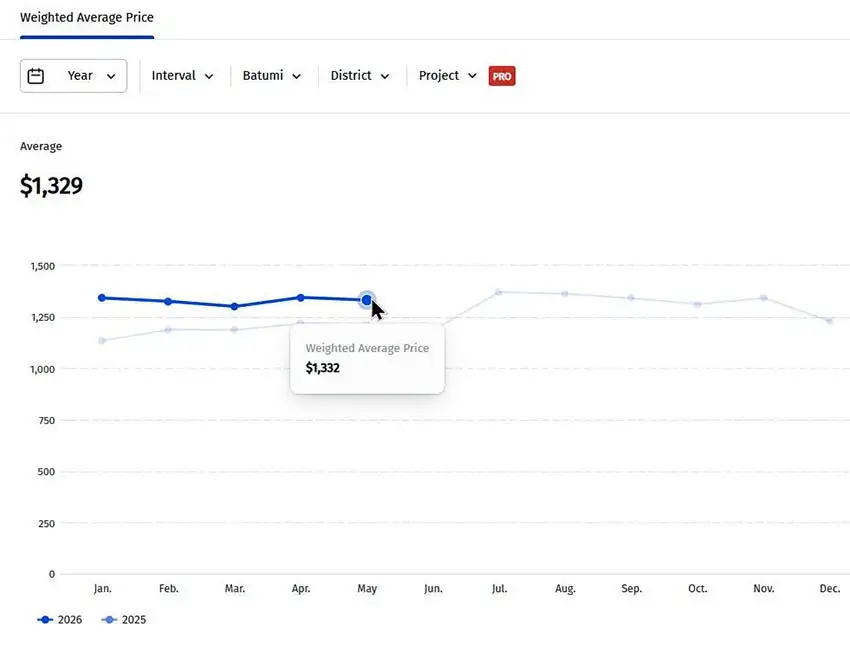
It should be noted that price dynamics on the primary market may be partially affected by delays in transaction registration. As a result, monthly price movements may not fully reflect current market conditions.
From January to May 2026, around 6,400 apartments were sold in Batumi, up 12.2% compared to the same period a year earlier. The total value of transactions increased by 29.1% to reach $407 million.
What This Means for Investors
Analysts at International Investment note that Georgia's residential property market continues to show positive overall momentum, although growth is beginning to slow in some segments. This is particularly evident in Batumi, where a strong influx of foreign buyers coincides with a rapidly expanding supply of new apartments.
At the same time, residential rental yields have been declining for the third consecutive year. While nominal rental yields remain close to 8% annually, actual returns fall to around 3% after accounting for property management, marketing, maintenance, and taxes. Vacancy periods, which are common in the residential rental market, can reduce profitability even further and, in some cases, result in negative returns.
This trend is especially pronounced in Batumi, where a large stock of investment-oriented housing has already accumulated while new residential developments continue to enter the market. The growing supply is likely to put further pressure on rental yields and gradually slow price growth.
As a result, investments in Georgia's residential property market are currently less attractive than they were several years ago. A more compelling alternative may be investments in the hospitality sector, particularly premium hotel properties, which typically offer more stable cash flows and higher returns.