







 France’s Property Market Slows Ahead of the 2027 Presidential Election
 Yerevan Real Estate: Rising Prices and the Risk of Overheating
 Cipriani Batumi: Italian Luxury Hospitality Brand Enters Georgia
 Vietnam Real Estate: The Price Boom Gives Way to a Slowdown
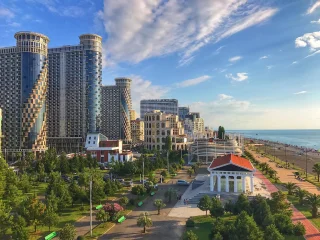 How Much Does Real Estate Cost in Batumi?
 Vienna Hotel Nights Rise as August Revenue Falls
Tourist Visits to Kakheti Increase by 21.7%
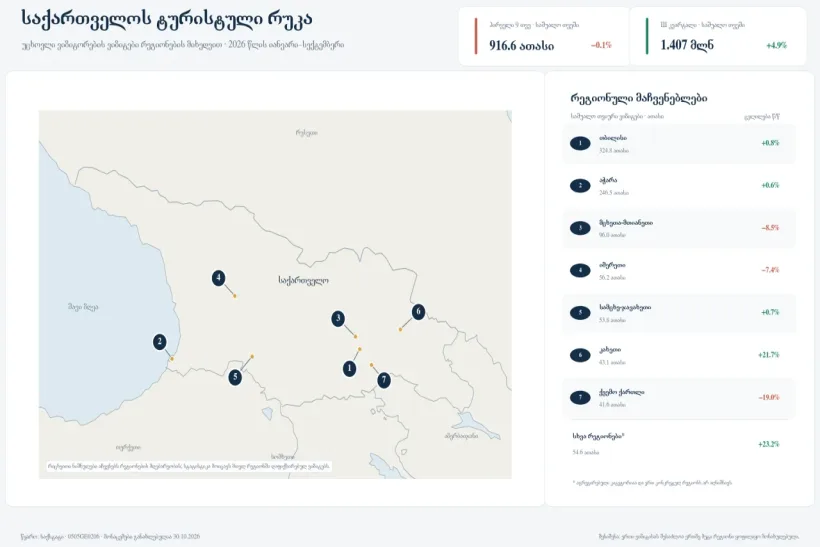
Tbilisi and Adjara remain the main destinations for international visitors to Georgia, but statistics for 2026 show growing interest in Kakheti and other regions of the country. Despite record results in the third quarter, the overall figure for the first nine months remained almost unchanged.
Georgia Tourism: Nine-Month Results
Georgia's regional tourism market has developed unevenly in 2026. From January to September, the average monthly number of visits by foreigners aged 15 and over reached 916,600, down 0.1% compared with the same period in 2025, according to the National Statistics Office of Georgia (Geostat).
A significant improvement was recorded in the third quarter. Between July and September, the average monthly number of regional visits reached 1.407 million, up 4.9% from the same period last year. This was the highest figure in Geostat's available quarterly records.
However, growth was uneven throughout the year. Visits increased by 1.3% in the first quarter but declined by 8.7% in the second. The positive results recorded between July and September offset much of the decline seen in the first half of the year. Overall, the nine-month statistics point more to stronger seasonal activity and regional differences than to a broad increase in tourism demand.
Tbilisi and Adjara Remain the Leading Destinations
Tbilisi and Adjara continue to attract the largest numbers of international visitors. During the first nine months of 2026, the average monthly number of visits reached 324,800 in the capital and 246,500 in Adjara. These figures increased by 0.8% and 0.6%, respectively, compared with the same period last year. Together, the two destinations accounted for approximately 62.3% of all regional visits in Georgia.
The statistics confirm Tbilisi's position as the country's main center for urban and business tourism, while Adjara remains the leading destination for holidays on the Black Sea coast.
Third-quarter results show that Adjara continues to be particularly popular during the summer. From July to September, the average monthly number of visits to the region reached 430,300, up 1.3% compared with the same period in 2025. In Tbilisi, the figure rose by 3.3% to 449,800.
Both regions maintain their leading positions, although their future development opportunities differ. Urban, cultural, and business tourism are particularly important for the capital. For Adjara, expanding coastal holiday offerings and reducing dependence on seasonal demand remain key priorities.
Kakheti Gains Popularity
One of the most notable developments in Georgia's regional tourism statistics for 2026 was the increase in visits to Kakheti. From January to September, the average monthly figure reached 43,100, up 21.7% compared with the same period in 2025.
Even stronger growth was recorded in the "Other Regions" category, where visits increased by 23.2%. The average monthly number reached 54,600. This trend may indicate that foreign travelers are exploring a wider range of destinations across Georgia.
For Kakheti, these positive developments are particularly important for wine, gastronomic, cultural, and rural tourism. The region has opportunities to develop more diverse travel experiences that can attract visitors throughout the year.
The increasing number of trips to other regions also demonstrates that Georgia's tourism potential extends beyond Tbilisi and the Black Sea coast.
Decline in Three Regions
Several Georgian regions recorded a decrease in visits. During the first nine months of 2026, the number fell by 7.4% in Imereti, 8.5% in Mtskheta-Mtianeti, and 19% in Kvemo Kartli. In Samtskhe-Javakheti, the figure remained almost unchanged, increasing by just 0.7%.
These regional differences show that Georgia's tourism development cannot be assessed solely through national statistics. A more complete picture requires separate analysis of travel offerings, transport accessibility, accommodation infrastructure, and service quality.
Regional tourism development should not be measured exclusively by visitor numbers. Economic performance also depends on revenue, length of stay, and accommodation occupancy rates.
Return to Pre-Pandemic Levels
Long-term statistics show that Georgia's regional tourism market continues to recover from the pandemic. In 2019, the average monthly number of visits by foreigners reached 902,300.
In 2022, the figure stood at 604,500, followed by a gradual recovery. Average monthly visits increased to 752,100 in 2023, 793,800 in 2024, and 866,500 in 2025.
As a result, the number of visits in 2025 was 9.2% higher than in the previous year but remained 4% below the 2019 level.
In the third quarter of 2026, the average monthly figure reached 1.407 million, exceeding the result for the same period in 2019 by approximately 0.6%. This indicates that tourism activity during the peak season has recovered to pre-pandemic levels and slightly surpassed them.
Regional Investment Potential
Statistics for 2026 highlight several important trends affecting the development of Georgia's tourism market and its investment attractiveness.
The first is the high geographical concentration of demand. A significant share of visits is concentrated in Tbilisi and Adjara, demonstrating the dependence of hotels, restaurants, transport providers, and other service businesses on these two destinations.
The second is the potential for developing alternative destinations. Increasing visits to Kakheti and other regions create opportunities to expand wine, gastronomic, cultural, eco-tourism, and mountain tourism offerings.
The third is pronounced seasonality. Record third-quarter figures once again confirm that summer remains the main period of tourism activity. For Adjara and other destinations with strong seasonal demand, attracting visitors throughout the year is essential. This would help hotels and other tourism-related businesses maintain more consistent occupancy and activity levels.
Tourism Market Outlook
The results for the first nine months of 2026 show that Georgia's tourism market continues to develop unevenly. The third-quarter record was a positive sign, but the largely unchanged overall figure for January–September indicates that the seasonal increase in visits has not yet translated into sustained growth throughout the year.
Tbilisi and Adjara retain their leading positions, while positive trends in Kakheti and other regions point to opportunities for further diversification of travel destinations.
Developing regional tourism in Georgia requires attracting more international visitors and distributing travel flows across different parts of the country. Increasing the length of stay and improving the economic performance of tourism services are equally important.
These factors will determine whether higher visitor numbers can deliver sustainable economic benefits and attract new investment to the tourism industries of Georgia's regions.