







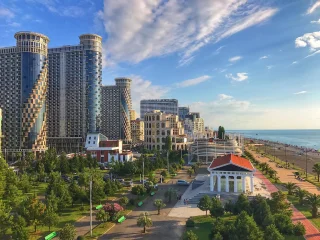
 How Much Does Real Estate Cost in Batumi?
 Vienna Hotel Nights Rise as August Revenue Falls
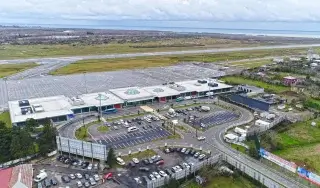 Investments, New Terminal, and Passenger Growth: Batumi Airport Plans Major Expansion
 Tbilisi to Host International Real Estate Forum Bringing Together Representatives from 16 Countries
 UK Grid Charges Could Rise 25% for Offices
 ART Riverfront Hotel Opens in Tbilisi with $68 Million Investment
Vietnam Real Estate: The Price Boom Gives Way to a Slowdown
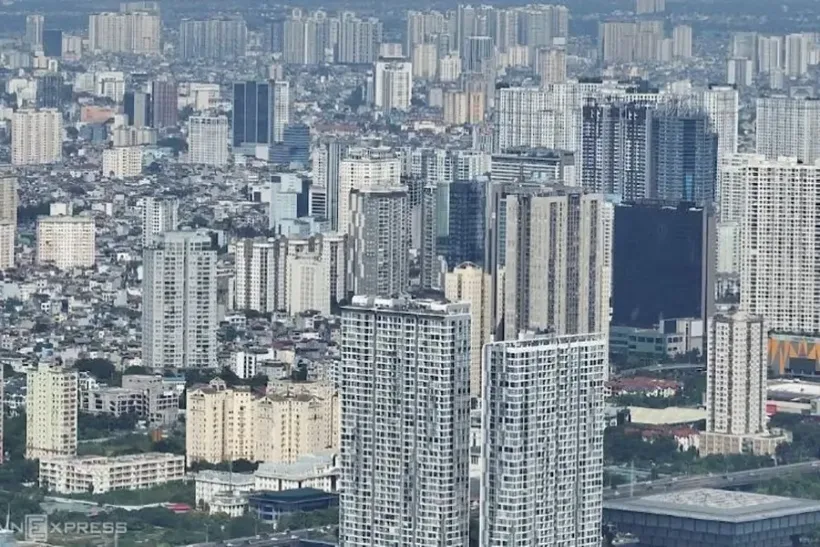
VnExpress
Vietnam's real estate market is experiencing a slowdown after several years of rapid price increases. According to Knight Frank, apartment sales in Hanoi fell by 52% in the third quarter of 2026, even as the average price of new homes remained above $4,000 per sq. m. Affordable options have virtually disappeared, while investors are struggling to resell properties.
New Apartments in Hanoi and Ho Chi Minh City
In the third quarter of 2026, apartments in new developments in Hanoi were offered at an average of $4,180 per sq. m, according to Avison Young. The figure rose by 1.5–2.3% over three months, considerably less than at the end of 2025. Prices in western and eastern suburban districts ranged from $3,300 to $4,500 per sq. m, while homes in the city centre and around West Lake reached $5,500–9,800.
In the third quarter of 2026, the average asking price of new apartments in Ho Chi Minh City fell to VND 102 million per sq. m, 39% below the previous quarter, according to Cushman & Wakefield. The change largely reflected the mix of developments: none of the most expensive projects in central districts entered the market. Analysts did not record a comparable, across-the-board decline in prices for existing listings. The study uses advertised prices before early-payment discounts and other incentives.
Affordable options have almost disappeared in both cities. In the first half of the year, 78% of new apartments released for commercial sale in Hanoi were in the high-end, luxury or super-luxury segments, according to a report by the Urban Affairs Committee of the city's People's Council. Homes priced below VND 25 million per sq. m were virtually absent. In Ho Chi Minh City, expensive properties accounted for 86% of new supply in the third quarter, leaving 14% in the mid-range segment.
|
Metric |
Hanoi |
Ho Chi Minh City |
|
Average price per sq. m |
$4,180 |
VND 102 million |
|
Share of high-end housing |
78% (H1 2026) |
86% (Q3 2026) |
|
Change in average price, Q3 |
+1.5–2.3% |
−39% (change in project mix) |
Even average-price estimates vary significantly. For the second quarter, Cushman & Wakefield put the figure for Hanoi at approximately $4,659 per sq. m, while CBRE estimated around $3,610. The firms cover different groups of projects and apply their own methodologies. When more premium developments enter the market, the overall average can rise without any increase in the asking prices of homes already under construction.
The Gap Between Incomes and Housing Costs
Wages in Vietnam remain low relative to housing costs. In the third quarter of 2026, average monthly earnings reached VND 9.2 million, or about $350, according to the National Statistics Office. The urban average for January–September was VND 10.7 million. Even at that level, a home in one of the country's largest cities remains beyond the reach of a substantial share of residents.
For comparison, a 50 sq. m apartment in a new Ho Chi Minh City development would cost approximately VND 5.1 billion at the average asking price of VND 102 million per sq. m. That is more than 46 years of earnings for a worker on the national average income. This is an illustrative calculation: it excludes household savings and everyday expenses, but shows how far property prices have moved beyond wages.
Mortgages further narrow the pool of potential buyers. Knight Frank recorded floating housing-loan rates of 12–15% a year in Hanoi. For borrowers, this means substantial monthly payments; for investors, it raises the possibility that rent will not cover debt servicing. Under these conditions, buyers show greater interest in completed homes with lower purchase budgets and clear financing terms.
FOMO and Speculative Purchases
In 2024–2025, apartments and land plots were often bought for quick resale. The rush was driven by FOMO (Fear of Missing Out) — anxiety about losing out on profits as real estate prices continued to climb. In October 2026, the Urban Affairs Committee of the Hanoi People's Council cited speculation and such expectations as factors behind the earlier surge in prices.
The situation has become particularly difficult for plots bought amid rumours about new roads, changes to development plans and large infrastructure projects. Hanoi officials say that some of these assets are hard to sell even at a substantial discount. The prospect of future development does not guarantee that residents or genuine demand will arrive soon.
Buyers who invested in projects under construction, intending to resell apartments in Hanoi before completing payments to developers, have also run into problems. VnExpress has described cases in which owners must urgently raise funds or accept a lower price when a preferential loan period expires. Instead of making the expected profit, they risk being left with an expensive loan and a property that has no buyer.
The Secondary Market Is Correcting
Knight Frank estimated that Hanoi apartment sales fell by 40% in the third quarter of 2026 compared with the preceding three months, and by 52% against the same period of 2025. Avison Young found that buyers purchased only 31% of the homes on offer, down from 70–80% a year earlier. A One Mount Group study published on November 5 reported an 83% year-on-year decline in sales of new apartments in Hanoi, to 1,700 units. The estimates differ because of the firms' methodologies and project coverage, but all point to a sharp weakening in demand.
On the secondary market, apartment prices in Hanoi fell in April–June for the first time since late 2022, according to CBRE. In some cases, buyers negotiated discounts of 8–12% as owners whose preferential mortgage periods had ended agreed to lower their asking prices. This does not mean that properties are becoming cheaper across the entire market.
Developers are generally still holding asking prices steady, offering instalment plans, bonuses or discounts for early payment instead. Consequently, an advertised price may differ substantially from the actual transaction amount. Hanoi authorities acknowledge that complete statistics on ownership transfers and repeat resales are still unavailable, complicating any assessment of price trends.
Ho Chi Minh City saw 2,373 apartments newly launched in the third quarter, almost four times as many as in the same period of 2025. Yet only 37% of the available primary-market supply was sold, including units left over from previous quarters. Demand was strongest for developments priced below VND 100 million per sq. m, with convenient transport links and the required legal approvals.
Rental Yields and Investment Risks
High purchase prices limit landlords' returns. According to Batdongsan.com.vn, the rental yield on apartments in Hanoi reached 2.4% per year in the third quarter of 2026, compared with 3.4% in Ho Chi Minh City (within its former city boundaries). Da Nang recorded a higher figure of 4.5%. The study compares advertised prices rather than actual transaction amounts.
|
City |
Annual rental yield |
|
Hanoi |
2.4% |
|
Ho Chi Minh City (former boundaries) |
3.4% |
|
Da Nang |
4.5% |
Taxes, repairs, management and vacant periods reduce returns further. When an apartment is bought with borrowed funds, interest payments can consume much of the rental income. Finding a buyer may also take a long time, and a discount on resale can wipe out several years of earnings.
Foreign investors also face legal restrictions. Vietnam's current Housing Law allows foreigners to purchase apartments in certain commercial developments, but their combined ownership in an apartment building is capped at 30%. For individuals, the normal ownership term is limited to 50 years and may be extended once for up to another 50 years. Buying an apartment does not give a foreigner the right to acquire land plots freely.
In October, lawmakers introduced amendments changing the conditions for foreigners buying property in Vietnam. The bill would retain the right to purchase apartments but exclude ownership of individual houses, including villas and townhouses. Legislators are also discussing whether the foreign ownership quota should remain in the law itself or be determined by the government.
Outlook for the Property Market in 2027
Cushman & Wakefield expects more than 27,000 new apartments to enter the Ho Chi Minh City market between the fourth quarter of 2026 and the end of 2027. Buyers will have more choice, while developers will have to compete harder for customers who can afford their projects. Overpriced developments may need more flexible payment schedules and discounts.
Hanoi plans to expand social housing construction. Under the municipal authorities' plans, 28,696 apartments across 27 projects are due to enter the market in 2027. This would increase the options available to people eligible for the government programme, but it would not immediately resolve the shortage of affordable new homes on the open market.
Savills' October review confirms that borrowing costs and housing affordability are important factors in buyers' decisions in Hanoi and Ho Chi Minh City. If supply continues to expand, the slowdown could persist without a sharp fall in asking prices: sellers and developers will need time to adjust to what buyers can afford. The extent of any correction will vary by location and property segment.
International Investment analysts note that betting on uninterrupted price increases is no longer a reliable investment strategy. The sharp drop in transactions and difficulties with resale are especially dangerous for buyers who borrowed money and expected to realise a quick profit. In this market, a property's actual liquidity matters more than the rate of average price growth shown in reports.
Developments with clear legal documentation, established infrastructure and proven long-term rental demand may prove more resilient. Even so, investors need to assess net income, borrowing terms and the likely time needed to sell. An excessively high purchase price can turn even a sought-after property into a loss-making investment.
Frequently Asked Questions About Vietnam Real Estate
How much do apartments cost in Hanoi?
In the third quarter of 2026, new apartments averaged around $4,180 per sq. m, according to Avison Young.
What are apartment rental yields in Vietnam?
In the third quarter of 2026, annual yields before expenses were 2.4% in Hanoi, 3.4% in Ho Chi Minh City and 4.5% in Da Nang.
What rules apply to foreigners buying apartments?
Purchases are allowed in eligible developments; foreign ownership is capped at 30% of units in a building, and the standard ownership term is up to 50 years.